

HIV
Immersive audiovisual (remix of media for dance performance & scientific research)
sample excerpt…
A new work rhythmically and visually remixing:
- Visuals and musical score from a 2005 dance-performance exploring HIV serodiversity, commissioned by the Newfoundland Festival of New Dance, and created in collaboration with Matthew DeGumbia, and…
- time-lapse fluorescence microscopy (showing MDMs sequentially engulfing HIV-1-infected Jurkat T cells from:
AE Baxter, RA Russell, CJ A Duncan, MD Moore, CB Willberg, JL Pablos, A Finzi, DE Kaufmann, C Ochsenbauer, JC Kappes, F Groot, QJ Sattentau, Macrophage infection via selective capture of HIV-1-infected CD4+ T cells, 2014
https://doi.org/10.1016/j.chom.2014.1…).

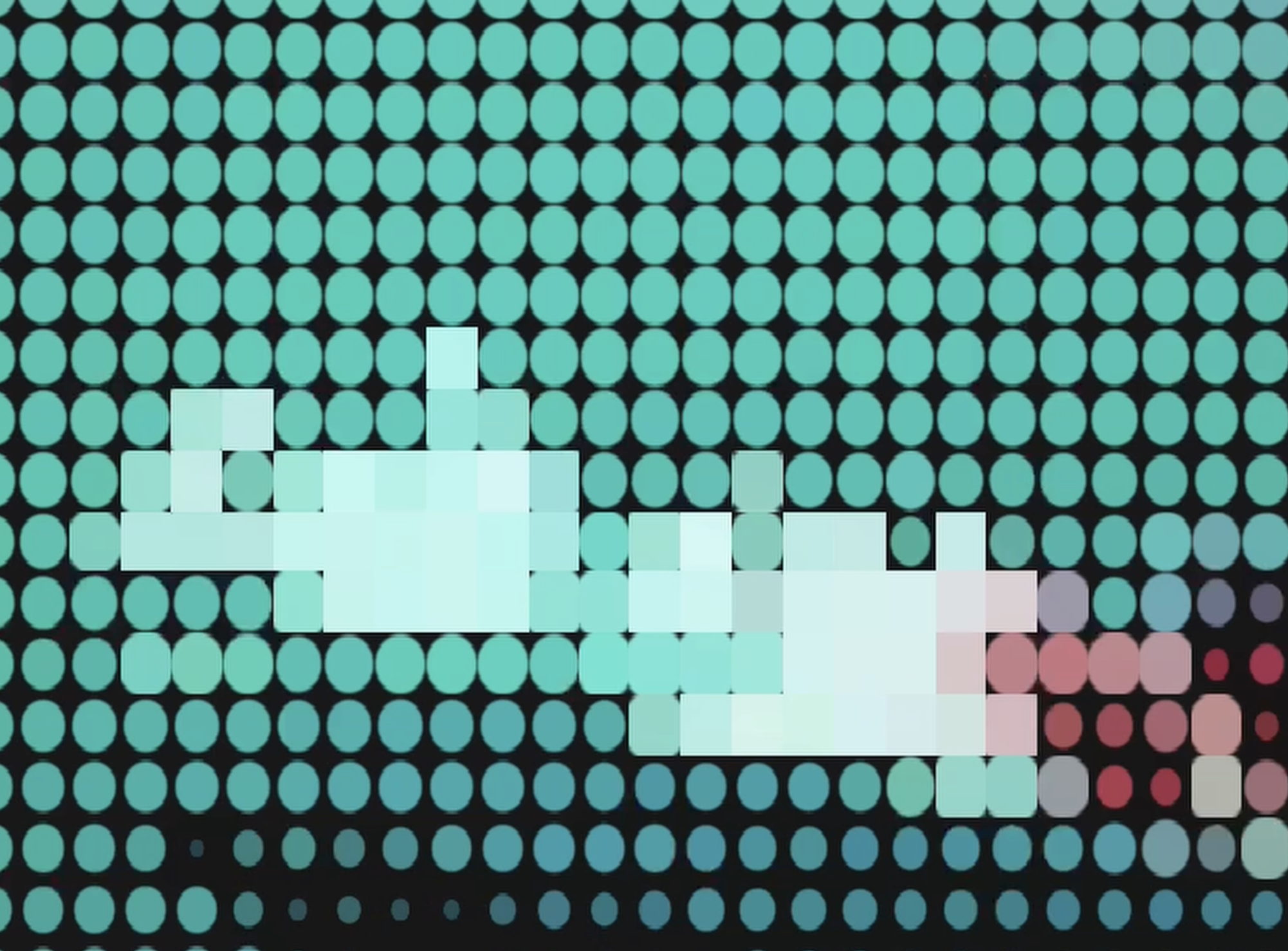
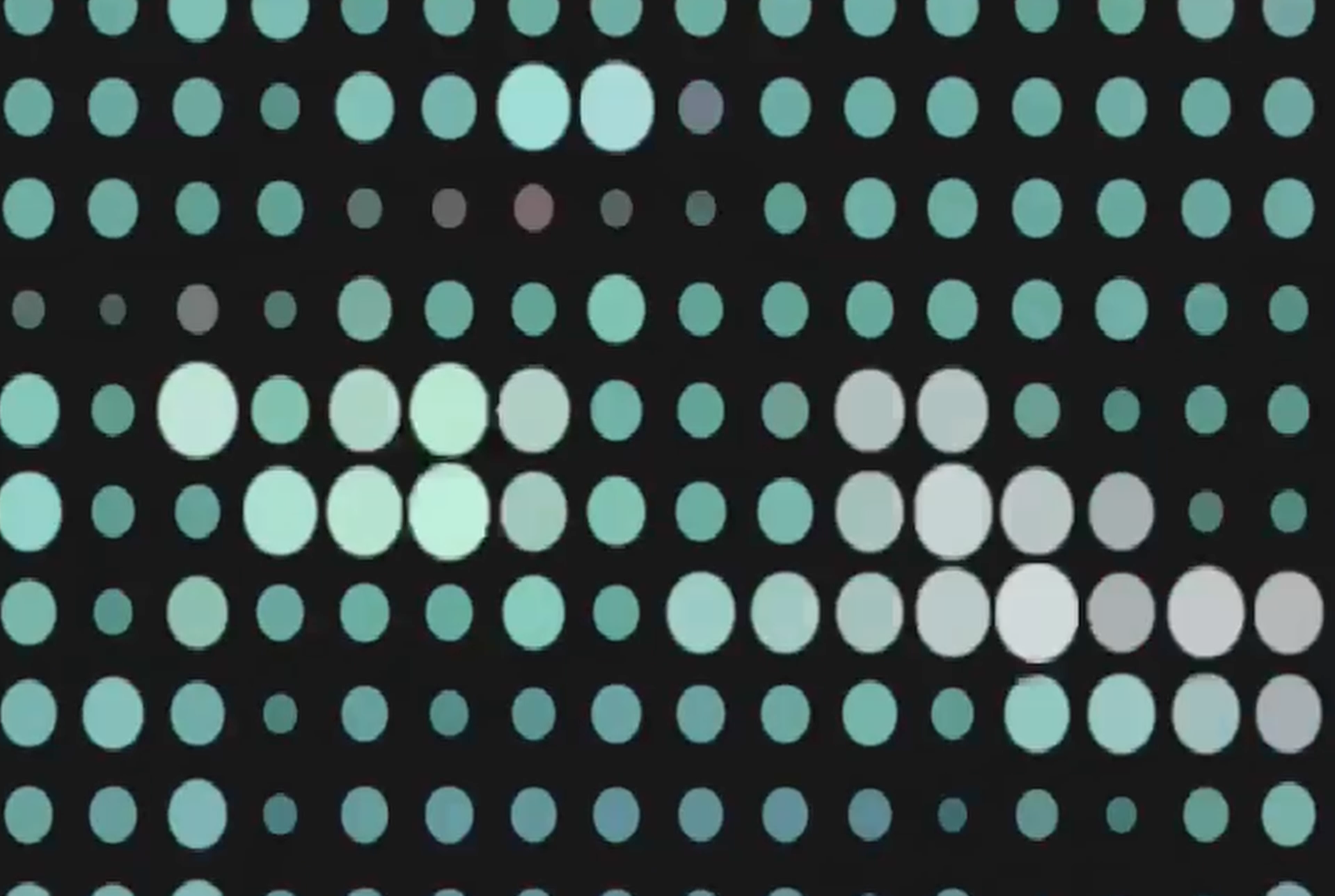
Sound design and video are rhythmically reprocessed to link kinesthetic touch (human gesture, feather, skin) with microscopic touch (cellular engulfment, immunological recognition). Integrated into this remix are new geometric abstractions… grids of circles and 3D graph overlays.
The resulting piece entangles macro and micro scales of intimacy and defense, reflecting on the porous, oscillating boundaries between self and other, health and illness, visibility and invisibility. Drawing on somesthetics and microscopy, lived experience and health data, this remix bridges affective movement languages with cellular choreography, forming an audiovisual meditation on vulnerability, memory, and intercellular dynamics.
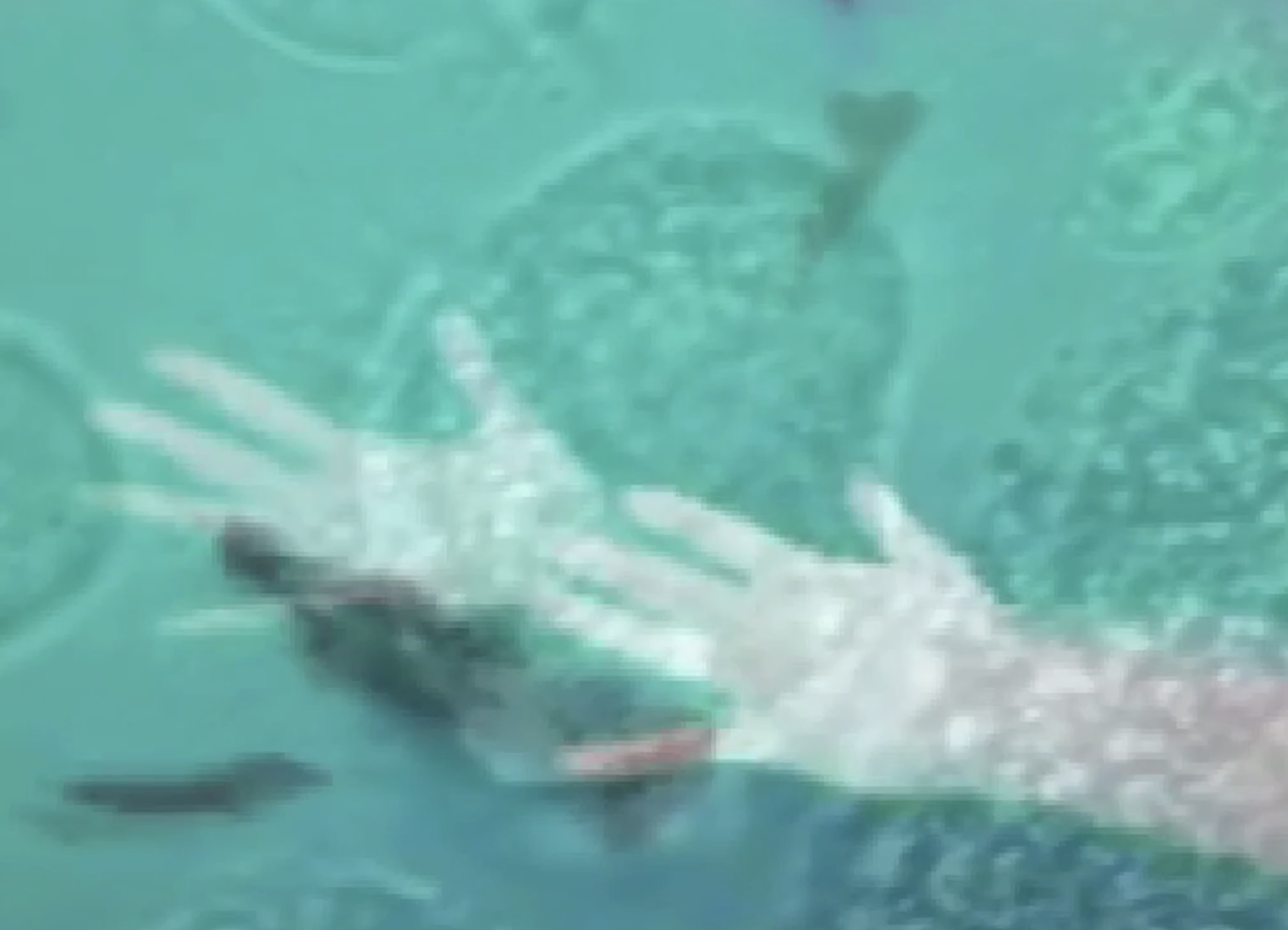
Still frames of immersive projection on planetarium dome (depicting ‘atomised’ hands grasping at cells)…


Shortly after completing the piece, my wife and I travelled to nearby Figueres to visit the Dalí Theatre-Museum. Dalí’s work had been familiar from reproductions at home when I was growing up, and the hotel was also lined with prints of his paintings and letters. Being surrounded by them again pushed me to finally ask what was going on beneath all this imagery. Before going to the museum, we read accounts of his father making him look at photographs of venereal disease as a child — something never mentioned in the museum itself (which Dalí curated). With this in mind, his obsessions, eccentric behaviours, and compositional choices took on a new and painfully legible clarity.
Throughout his work, I also noted his intense fascination with science and technology and, often, with trying to understand recent discoveries in relation to the human body, feeling, and memory. In works such as Galatea of the Spheres we see the three dimensional atomisation of his wife’s portrait —or rather, the personification of atoms, and in
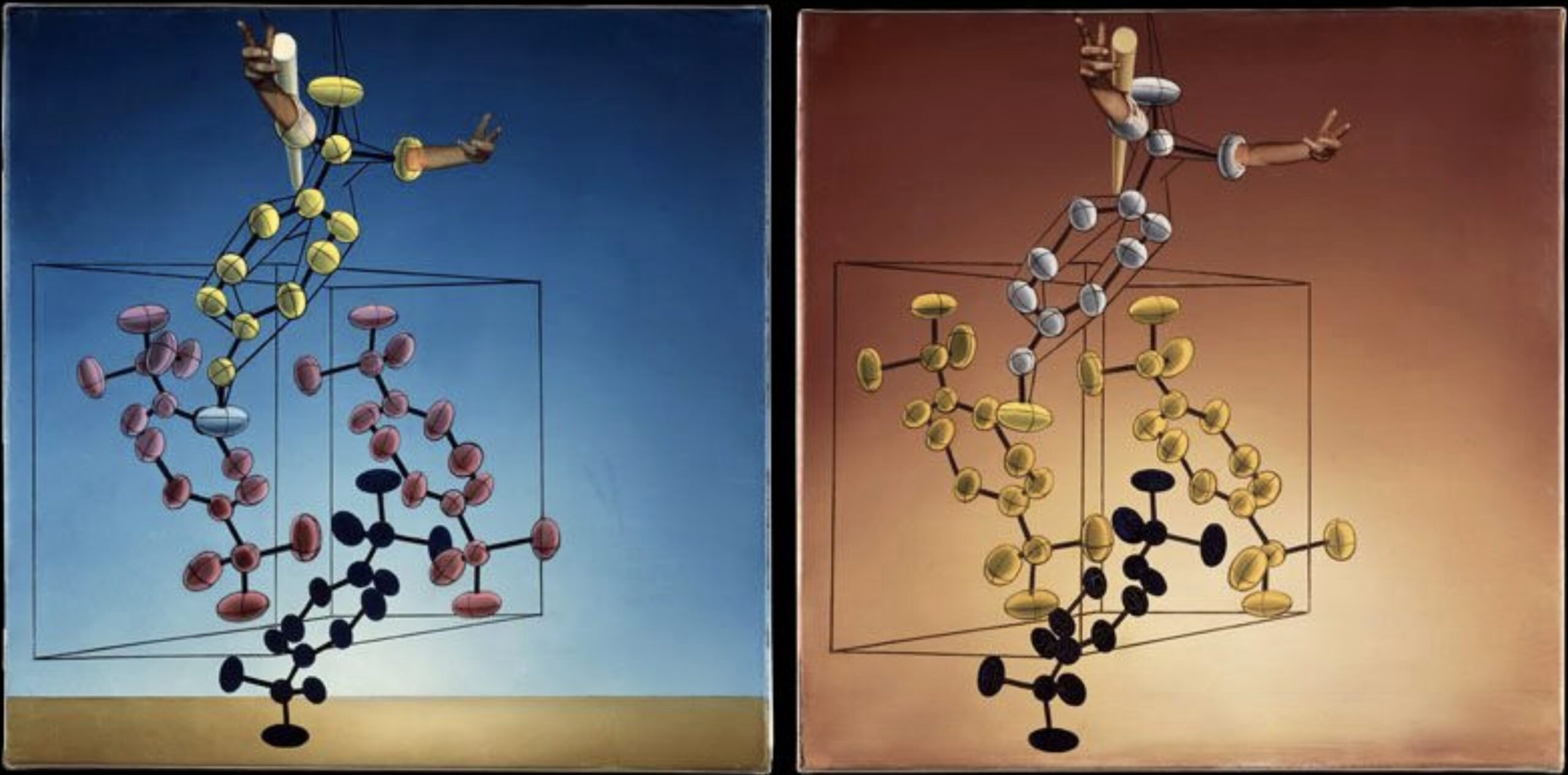
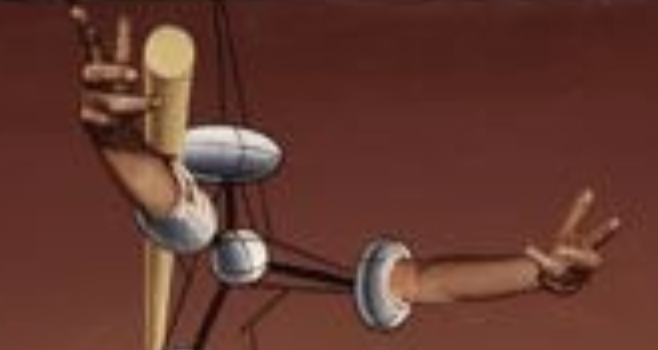
The Structure of DNA. Stereoscopic Work, the double helix is personified with hands and arms grasping —perhaps trying to comprehend the nature and implications of the data.
In my video, hands originally depict grasping at or despite fear, now —superimposed with research videos— also struggle to grasp biological reality, at the cellular level of infection.
We see Dali’s interest in juxtaposition and multi-perspective images that unsettle our perception of reality, and how he explores scientific concepts in order to achieve emotional and spiritual ends. It inspires me to ask not only “How can art serve or communicate science?” but also “How can science serve art?”